Back and spine conditions can affect movement, comfort, sleep, and everyday activities. When surgery becomes necessary, many patients are concerned not only about treating the spinal problem but also about how much impact the procedure may have on the surrounding muscles. Minimally invasive spine surgery (MISS) is designed to address spinal conditions through smaller incisions and a muscle-sparing approach, which can help reduce disruption to the tissues around the spine.
Unlike traditional open spine surgery, which may require a larger incision and greater exposure of the spinal structures, minimally invasive techniques use specialized instruments and advanced imaging guidance. By limiting unnecessary muscle separation and tissue disruption, these procedures can support a smoother recovery for appropriately selected patients.
What Is Minimally Invasive Spine Surgery?
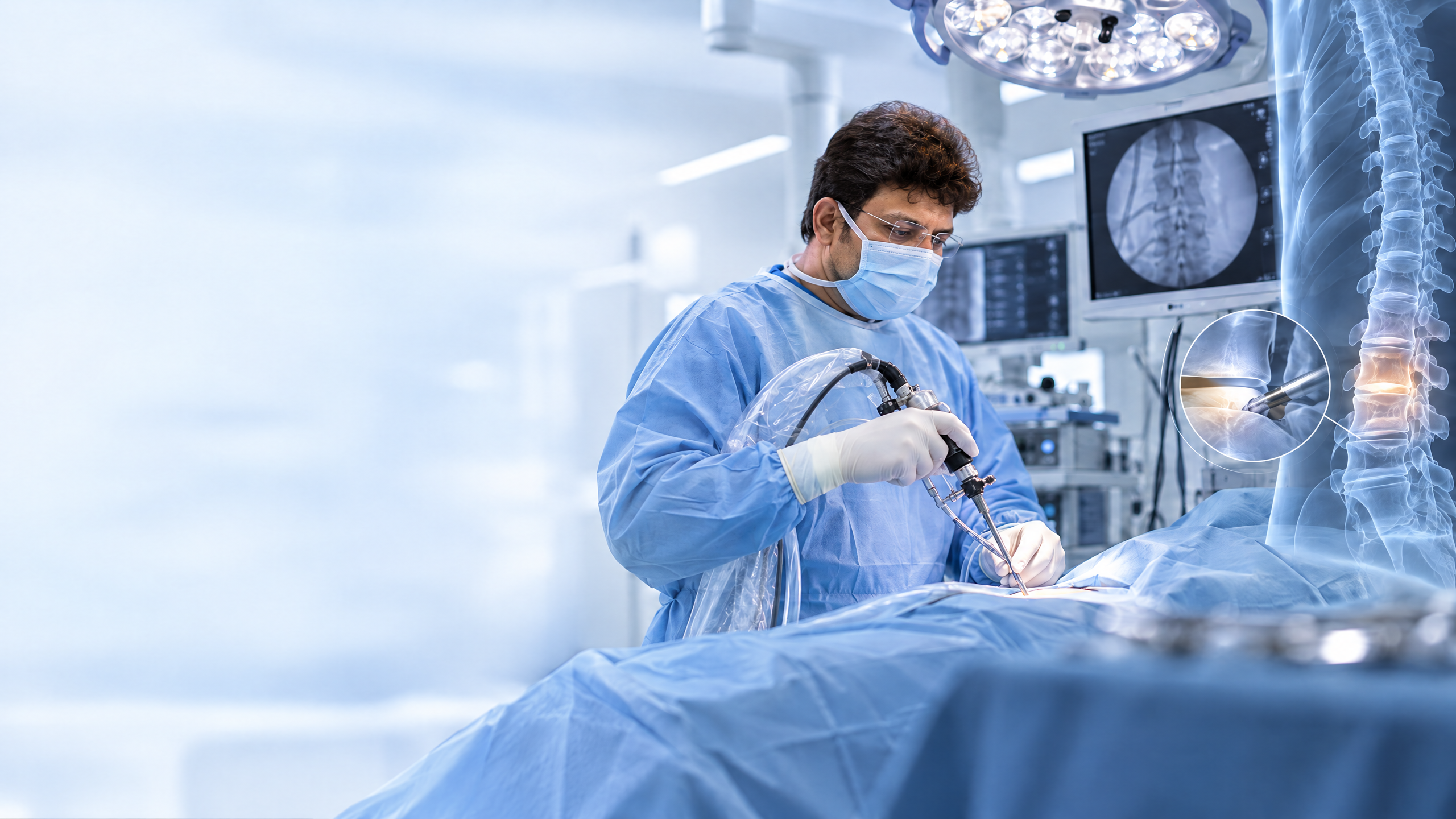
Minimally invasive spine surgery is a group of surgical techniques used to treat certain spinal conditions while minimizing damage to surrounding muscles and soft tissues. Depending on the condition, surgeons may use tubular retractors, endoscopic equipment, microscopes, or other specialized instruments to reach the affected area.
The exact technique depends on the patient’s diagnosis, symptoms, spinal anatomy, and overall health. MISS may be considered for selected conditions such as certain types of disc problems, spinal stenosis, nerve compression, and other disorders where a less invasive approach is appropriate.
How Does It Reduce Muscle Damage?
One of the main advantages of minimally invasive spine surgery is that the surgeon can access the affected spinal area without extensively cutting or detaching the muscles surrounding the spine.
1. Smaller Incisions
MISS generally uses smaller incisions than conventional open procedures. A smaller opening can mean less disturbance to the skin, muscle, and soft tissue around the surgical area.
2. Less Muscle Retraction
During traditional surgery, muscles may need to be moved or retracted to provide adequate access to the spine. Minimally invasive techniques can use narrow working channels or tubular retractors to create a pathway to the surgical site while limiting muscle displacement.
3. Muscle-Sparing Surgical Approach
The goal of MISS is to reach the targeted spinal structure while preserving as much healthy surrounding tissue as possible. Instead of creating a wide surgical field, the surgeon works through a focused access point.
4. Reduced Soft-Tissue Disruption
Less disturbance of muscles and other soft tissues may help reduce postoperative soreness and stiffness in suitable patients. However, the amount of tissue disruption still depends on the specific procedure and the complexity of the spinal condition.
5. Potentially Faster Functional Recovery
Because minimally invasive procedures may cause less muscle and soft-tissue disruption, some patients may be able to begin movement and rehabilitation sooner. Recovery varies significantly depending on the surgery, individual health, and the underlying spinal condition.
Why Is Protecting Spinal Muscles Important?
The muscles surrounding the spine play an important role in posture, stability, movement, and support. Significant muscle disruption can contribute to postoperative discomfort and may require additional time for the tissues to heal.
Preserving healthy muscle tissue whenever safely possible can therefore be an important consideration during spine surgery. Minimally invasive techniques aim to provide the surgeon with adequate access to the affected area while reducing unnecessary disruption.
What Are the Potential Benefits?
For carefully selected patients, minimally invasive spine surgery may offer several potential advantages compared with more invasive approaches:
- Smaller surgical incisions
- Less disruption of surrounding muscles
- Reduced soft-tissue trauma
- Potentially less postoperative discomfort
- Earlier movement in appropriate cases
- Shorter hospital stays for some procedures
- Faster return to routine activities in some patients
- Smaller scars compared with larger open incisions
These benefits are not guaranteed for every patient. The outcome depends on the type of spinal problem, surgical technique, individual anatomy, and the patient’s overall health.
Is Minimally Invasive Spine Surgery Suitable for Everyone?
No. Minimally invasive surgery is not automatically the best option for every spinal condition. Some patients may require traditional surgery because of complex spinal anatomy, extensive nerve compression, instability, deformity, trauma, or other factors.
A spine specialist should evaluate imaging studies, symptoms, medical history, and physical examination findings before recommending a surgical approach. The primary objective should always be safe and effective treatment rather than simply choosing the smallest incision.
What Can Patients Expect During Recovery?
Recovery after minimally invasive spine surgery varies according to the procedure performed. Some patients may experience temporary soreness around the surgical site, while others may require a longer rehabilitation period.
Patients are generally advised to follow their surgeon’s instructions regarding walking, lifting, exercise, wound care, medications, and physiotherapy. Gradually increasing activity under appropriate medical guidance can help support recovery.
Choosing the Right Spine Surgeon
The success of minimally invasive spine surgery depends on more than the size of the incision. Proper patient selection, accurate diagnosis, surgical expertise, appropriate technology, and postoperative care all play important roles.
If you are considering minimally invasive spine surgery, discuss your symptoms and treatment options with an experienced spine specialist. A detailed evaluation can help determine whether a minimally invasive approach is suitable for your condition.
Conclusion
How minimally invasive spine surgery reduces muscle damage is mainly related to its muscle-sparing access techniques. Smaller incisions, limited muscle retraction, and focused access to the spine can reduce unnecessary disruption of surrounding tissues in appropriately selected cases. This may contribute to reduced postoperative discomfort and a smoother recovery for some patients.
However, minimally invasive surgery is not suitable for every spinal condition. The best treatment should be selected after a comprehensive evaluation by a qualified spine specialist, with the patient’s safety and long-term outcome as the primary priorities.
FAQs
1. Does minimally invasive spine surgery damage muscles?
Minimally invasive spine surgery is designed to minimize unnecessary muscle disruption. However, some degree of tissue disturbance is still involved, depending on the specific procedure.
2. Is recovery faster after minimally invasive spine surgery?
Some patients may recover more quickly because of reduced soft-tissue disruption, but recovery time varies according to the surgery, spinal condition, and individual health.
3. Is minimally invasive spine surgery safer than open surgery?
Both approaches can be appropriate depending on the condition. Minimally invasive surgery may reduce certain aspects of tissue trauma, but the safest approach depends on the patient’s specific diagnosis and anatomy.
4. Can all spine surgeries be performed minimally invasively?
No. Some complex conditions require traditional or more extensive surgical approaches. A spine specialist can determine which technique is appropriate.
5. Will minimally invasive spine surgery leave a scar?
Yes. Any surgical procedure involving an incision can leave a scar. Minimally invasive procedures generally use smaller incisions, which may result in smaller scars.