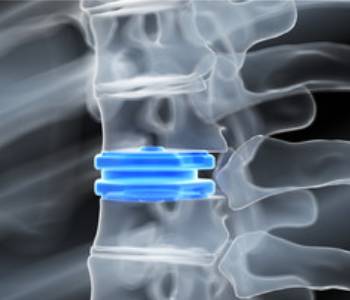
Biomedical engineers have designed many different versions of the artificial disc. However, the most commonly used model is made of a plastic-like material called a biopolymer. This particular material mimics the rubbery texture of your body’s intervertebral discs. The biopolymer is sandwiched between two metal plates that allow for stable attachment to adjacent vertebrae.
During a minimally invasive Artificial Disc Replacement, your surgeon will make a small incision, typically on the front (or anterior) side of the body. An anterior approach allows for a clearer visual of, and complete access to, our intervertebral discs. Under normal circumstances, our bones, muscles, and critical nerves including the spinal cord shield our discs from view on the posterior side of the body. Through this anterior approach, your surgeon can gently push delicate organs and tissues to the side. Your physician can then remove the damaged disc using small, specialized tools and advanced surgical techniques. To maintain vertebral height, your surgeon will implant the disc replacement and attach the artificial disc to the adjacent vertebrae. The surgery is concluded with returning organs and tissues to their rightful positions and closing the incision.