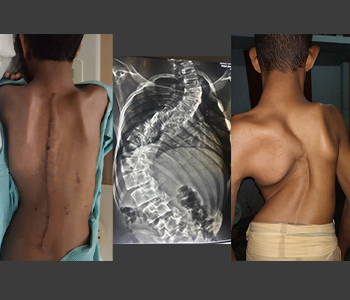
Traditional Posterior Spinal Fusion corrective surgery
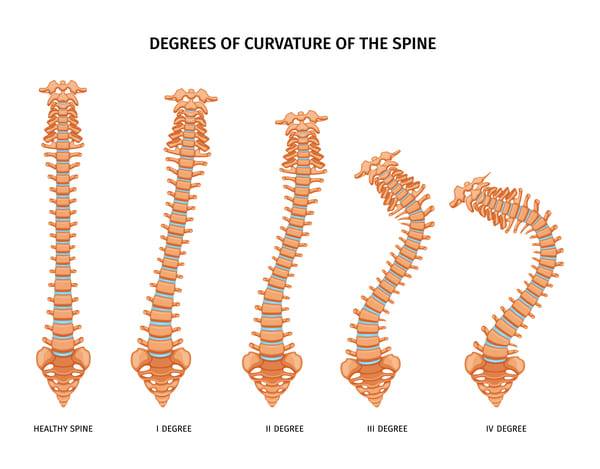
It involves permanently fusing two or more adjacent vertebrae so that they grow together at the spinal joint and form a solid bone that no longer moves. Modern surgical approaches and instrumentation—rods, screws, hooks, and/or wires placed in the spine—have enabled spinal fusion surgeries to achieve better curvature correction and faster recovery times than in the past. An advantage of spinal fusion surgery is that it has a long-term record of safety and efficacy for treating scoliosis. While a drawback to the procedure is that any fused vertebrae will lose mobility, which can limit some of the back’s bending and twisting, today’s spinal fusions tend to fuse fewer vertebrae and maintain more mobility than in the past.