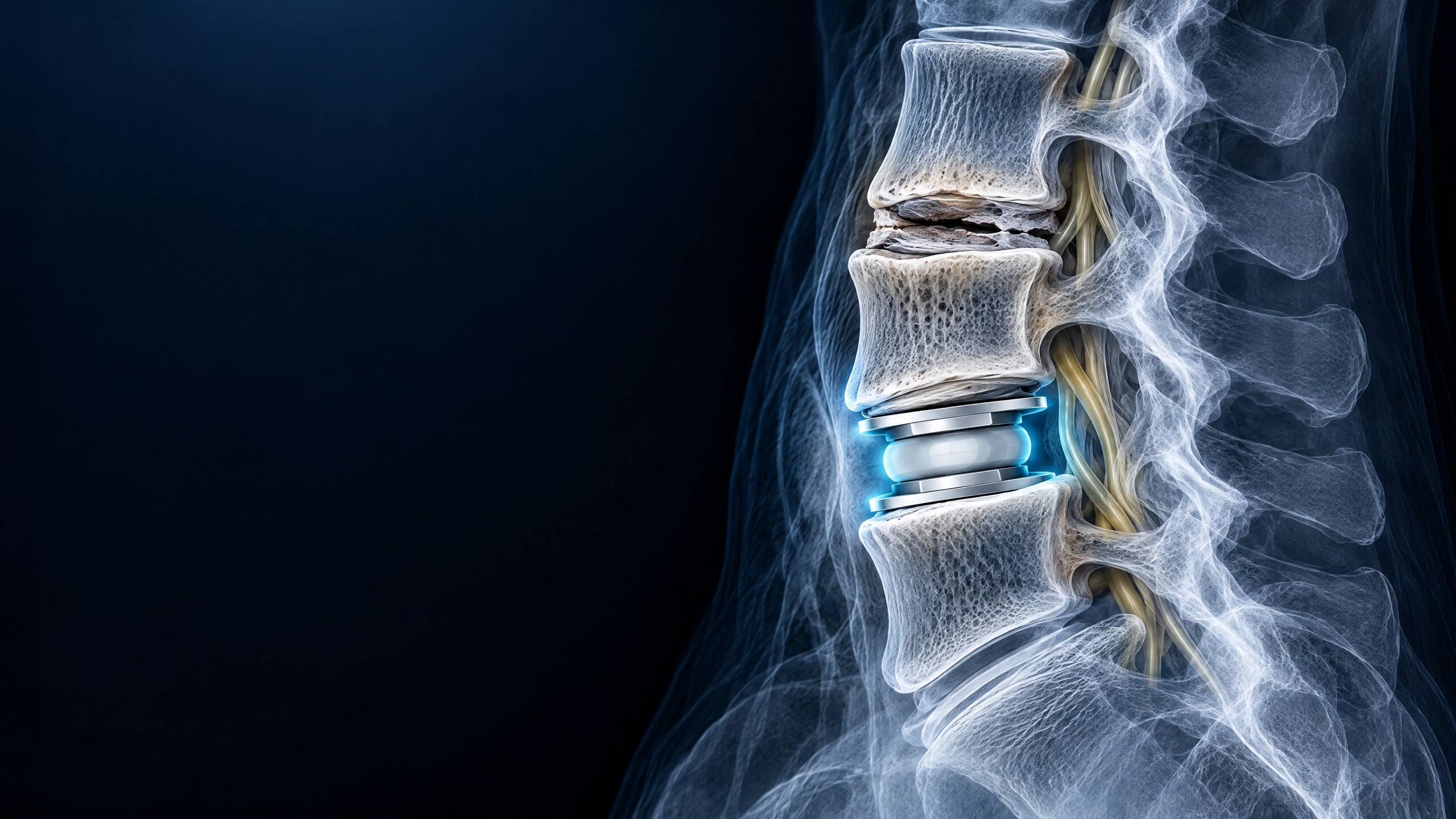
Degenerative disc disease can cause persistent back or neck pain when the spinal discs gradually lose their flexibility, height, and ability to absorb shock. When conservative treatments do not provide adequate relief, disc replacement surgery for degenerative disc disease may be considered for selected patients. The procedure involves removing a damaged spinal disc and replacing it with an artificial disc designed to preserve movement between the vertebrae.
Unlike spinal fusion, which joins two or more vertebrae together, disc replacement aims to maintain motion at the treated spinal segment. However, it is not suitable for everyone, and an experienced spine specialist needs to evaluate the condition before recommending surgery.
What Is Degenerative Disc Disease?
Spinal discs are soft structures located between the vertebrae. They act as cushions and help the spine move comfortably. With age, injury, or repeated stress, these discs can gradually deteriorate.
Common symptoms may include:
- Persistent lower back or neck pain
- Pain that increases with certain activities
- Stiffness or reduced spinal movement
- Pain spreading into the arms or legs
- Tingling or numbness caused by nerve irritation
- Weakness in some cases
The severity of symptoms does not always correspond directly to the appearance of disc degeneration on an imaging scan. A spine specialist generally considers symptoms, physical examination findings, medical history, and imaging together before recommending treatment.
How Does Disc Replacement Surgery Work?
During disc replacement surgery, the damaged disc is carefully removed from the affected spinal level. The space between the vertebrae is then prepared, and an artificial disc is positioned in the space.
The artificial disc is designed to provide support while allowing controlled movement. Depending on the location of the damaged disc, the procedure may be performed in the cervical spine or lumbar spine.
The exact surgical approach depends on factors such as the affected spinal level, severity of degeneration, spinal alignment, and the patient’s overall condition.
Who May Benefit From Disc Replacement?
Disc replacement may be considered for carefully selected patients who have significant symptoms associated with disc degeneration and have not achieved sufficient improvement through non-surgical treatment.
A doctor may evaluate:
- The location and severity of disc degeneration
- Duration and intensity of symptoms
- Response to physiotherapy and medications
- Spinal stability and alignment
- Presence of nerve compression
- Overall bone and joint health
- Other spinal conditions that may affect the outcome
Patients with advanced arthritis of the facet joints, significant spinal instability, certain deformities, osteoporosis, infection, or other conditions may not be suitable candidates. A detailed evaluation is therefore important before deciding on surgery.
Potential Benefits of Disc Replacement Surgery
For appropriate candidates, artificial disc replacement may offer several potential advantages.
Preservation of spinal motion:
The artificial disc is designed to maintain movement at the treated level rather than permanently joining the vertebrae.
Relief from disc-related pain:
Removing the damaged disc can reduce pain associated with the affected spinal segment when the disc is confirmed to be the primary pain source.
Support for normal spinal movement:
Maintaining movement may help preserve the functional mechanics of the treated spinal segment.
Potential alternative to fusion:
For selected patients, disc replacement can be considered as an alternative to fusion surgery.
It is important to understand that results vary between patients, and surgery does not guarantee complete elimination of pain.
Disc Replacement Surgery vs Spinal Fusion
Both procedures can be used to treat certain spinal conditions, but their goals are different.
In spinal fusion, the affected vertebrae are joined together to eliminate movement at the treated segment. In disc replacement, the damaged disc is replaced with an artificial disc intended to maintain controlled motion.
The choice between these procedures depends on the patient’s diagnosis, spinal anatomy, age, activity level, bone health, and other factors. A spine surgeon can explain which option is more appropriate after reviewing the patient’s clinical and imaging findings.
Recovery After Disc Replacement Surgery
Recovery varies depending on the spinal level treated, surgical technique, overall health, and individual healing response. Patients may be encouraged to gradually return to normal activities according to their surgeon’s instructions.
During recovery, patients may need to:
- Follow prescribed activity restrictions
- Attend follow-up appointments
- Perform recommended rehabilitation exercises
- Avoid excessive lifting or strenuous activity during the early healing period
- Gradually increase daily activities
Following post-operative instructions carefully can support a safe recovery.
Is Disc Replacement Surgery Right for You?
Disc replacement is not a general solution for every person with degenerative disc disease. The decision should be based on a comprehensive assessment rather than an imaging report alone.
If persistent neck or back pain is affecting your daily activities despite appropriate conservative treatment, consulting a qualified spine specialist can help determine whether disc replacement or another treatment option may be appropriate.
Frequently Asked Questions
- What is disc replacement surgery for degenerative disc disease?
Disc replacement surgery involves removing a damaged spinal disc and replacing it with an artificial disc designed to restore support and preserve movement at the treated spinal level. - Is disc replacement better than spinal fusion?
Neither procedure is universally better. The appropriate option depends on the patient’s spinal condition, anatomy, symptoms, bone health, and other clinical factors. - Who is a candidate for artificial disc replacement?
Patients with symptomatic disc degeneration who have not responded adequately to conservative treatment may be considered, provided they meet the medical and anatomical requirements for the procedure. - Can degenerative disc disease be treated without surgery?
Yes. Depending on the condition, treatment may include activity modification, physiotherapy, medications, lifestyle changes, and other non-surgical approaches. Surgery is generally considered when appropriate non-surgical treatment does not provide sufficient relief. - Does disc replacement preserve spinal movement?
The artificial disc is designed to allow controlled movement at the treated spinal level, unlike fusion, which intentionally eliminates movement between the fused vertebrae.