Non-Fusion Scoliosis Surgery vs Spinal Fusion:
What’s Better?
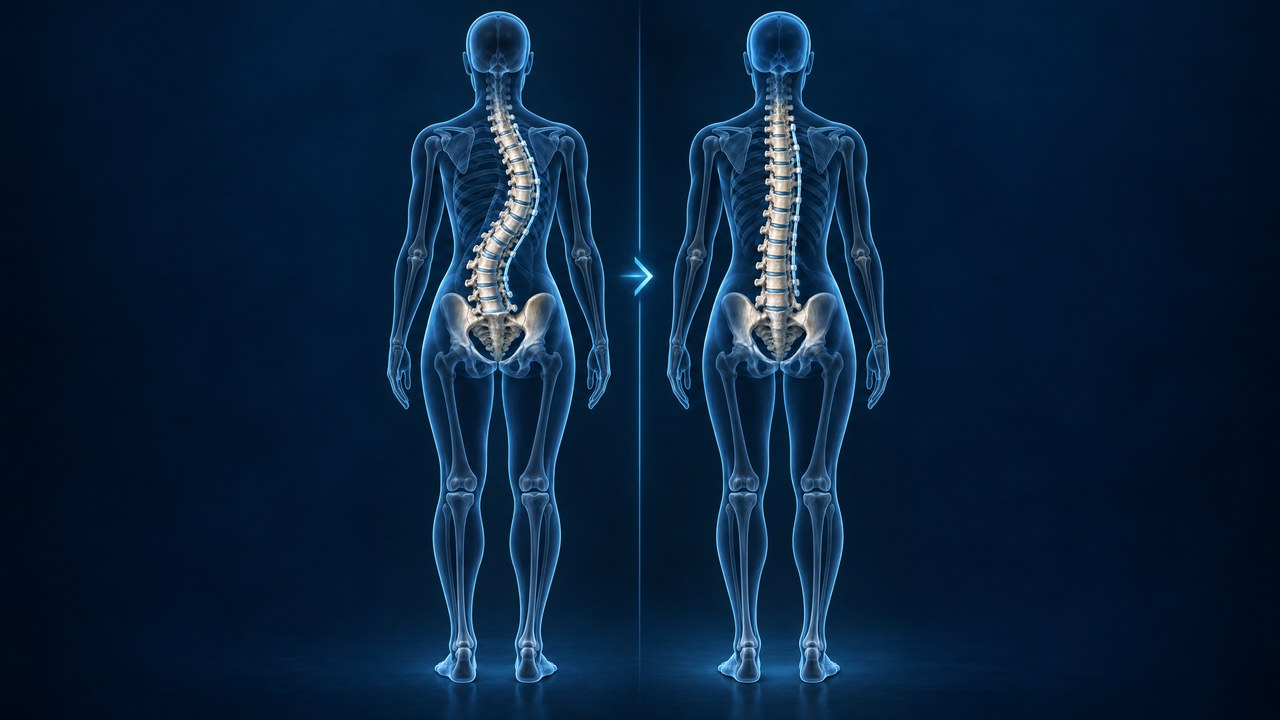
When scoliosis becomes severe or continues to progress despite non-surgical treatment, surgery may be considered to correct the spinal curve and prevent further progression. Two approaches that may be discussed are non-fusion scoliosis surgery and spinal fusion. Understanding the difference between these procedures can help patients and families have
a more informed discussion with a spine specialist.
There is no single procedure that is automatically “better” for every scoliosis patient. The appropriate option depends on factors such as age, remaining spinal growth, curve size and flexibility, overall health, and the specific type of scoliosis. The Scoliosis Research Society notes that spinal fusion remains the most established surgical treatment for adolescent
idiopathic scoliosis, while growth-friendly and non-fusion techniques may be considered in selected patients.
What Is Non-Fusion Scoliosis Surgery?
Non-fusion scoliosis surgery refers to procedures designed to correct or control a spinal curve without permanently joining the affected vertebrae together. One example is vertebral body tethering (VBT). In this technique, screws and a flexible tether are placed along the outside of the spinal curve. The tether helps guide the spine toward a straighter alignment while the child continues to grow.
A major potential benefit is preservation of movement in the treated portion of the spine. However, non-fusion procedures are not suitable for everyone. They are generally considered for carefully selected patients who still have meaningful growth remaining and meet specific clinical criteria.
What Is Spinal Fusion Surgery?
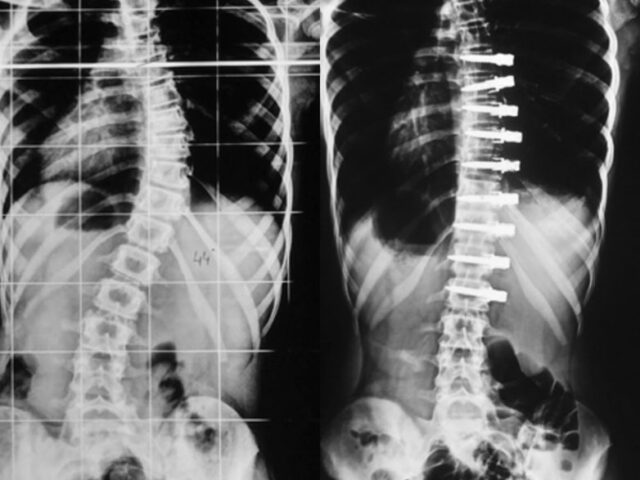
Spinal fusion Surgery is the established surgical approach for many patients with significant scoliosis. During the procedure, metal screws, hooks, and rods are used to correct and stabilize the spinal curve. Bone graft is placed between selected vertebrae, allowing them to gradually heal together into a solid fusion.
The fused portion of the spine no longer moves normally. The primary goals are to prevent the curve from progressing and achieve meaningful correction of the deformity. According to the Scoliosis Research Society, fusion typically becomes a consideration for significant or progressive curves, with the exact decision depending on the patient’s circumstances.
Non-Fusion Scoliosis Surgery vs Spinal Fusion
The main difference between these procedures is whether the treated spinal segments are permanently fused.
Non-Fusion Surgery
- Aims to preserve spinal movement.
- May use growth to help improve spinal alignment.
- Can be an option for selected children who are still growing.
- Avoids permanently joining the treated vertebrae.
- May have a risk of requiring additional treatment or revision if the correction is
insufficient or complications develop. - Requires careful patient selection and long-term follow-up.
Spinal Fusion
- Permanently joins selected vertebrae.
- Provides established correction and stabilization.
- Is widely used for severe or progressive adolescent idiopathic scoliosis.
- Does not depend on future spinal growth for correction.
- Reduces movement in the fused portion of the spine.
- Has potential risks associated with fusion, instrumentation and healing.
Fusion can also place additional stress on neighboring spinal segments over time, although this does not mean that every patient will develop problems after surgery. The Scoliosis Research Society describes adjacent-level disease and failed fusion among potential postoperative concerns.
Which Is Better: Non-Fusion or Fusion?
The answer is patient-specific. Non-fusion surgery may be attractive when preserving spinal mobility is an important goal and the patient has sufficient growth remaining to make the procedure appropriate. Vertebral body tethering, for example, is intended for a selected group of growing children rather than all scoliosis patients.
Spinal fusion may be preferable when a patient has a severe curve, limited remaining growth, or a curve pattern that is not suitable for a non-fusion technique. It has a long history of use and remains the prevalent definitive surgical treatment for many adolescent idiopathic scoliosis cases.
Therefore, choosing between non-fusion scoliosis surgery vs spinal fusion should not be based only on which procedure sounds newer or less invasive. A spine specialist should evaluate the patient’s X-rays, growth status, curve characteristics and long-term goals before recommending surgery.
Benefits of Preserving Spinal Motion
One of the major reasons non-fusion techniques have gained attention is the possibility of maintaining more natural movement in the spine. This can be particularly relevant for young patients who participate in activities requiring flexibility.
However, preserving motion must be balanced against the need for reliable curve correction and long-term spinal stability. Some patients may benefit from a non-fusion approach, while others may achieve a more predictable result with fusion.
Why Proper Evaluation Matters
Before deciding on scoliosis surgery, patients generally undergo a detailed evaluation that may include physical examination, standing spinal X-rays and assessment of skeletal maturity. Depending on the patient’s condition, additional imaging may be recommended.
Important factors include:
- Age and remaining growth
- Degree and location of the spinal curve
- Curve flexibility
- Rate of curve progression
- Overall spinal balance
- Symptoms and functional limitations
- Previous scoliosis treatment
- Long-term activity goals
These factors help the surgeon determine whether non-fusion surgery, spinal fusion or another treatment strategy is appropriate.
Final Thoughts
When comparing non-fusion scoliosis surgery vs spinal fusion, there is no universal answer to which is better. Non-fusion procedures may offer the advantage of preserving spinal motion and can be appropriate for selected growing patients. Spinal fusion, meanwhile, remains a well-established option for correcting and stabilizing significant scoliosis.
The best treatment is the one that matches the patient’s age, growth potential, curve characteristics and long-term needs. Patients and parents should discuss the expected benefits, risks, recovery, possibility of additional procedures and long-term outcomes with an experienced scoliosis surgeon before making a decision.
FAQs
1. Is non-fusion scoliosis surgery better than spinal fusion?
Not necessarily. Non-fusion surgery may be suitable for selected growing patients, while spinal fusion may be more appropriate for severe curves or patients who are not candidates for non-fusion techniques.
2. Does non-fusion scoliosis surgery preserve spinal movement?
Yes. Procedures such as vertebral body tethering are designed to preserve movement in the treated spinal segments rather than permanently fusing them.
3. Who may be eligible for vertebral body tethering?
Eligibility depends on factors such as remaining skeletal growth, curve characteristics and overall health. It is not appropriate for every scoliosis patient.
4. Is spinal fusion permanent?
Yes. In spinal fusion, selected vertebrae are joined together as the bone graft heals, creating a solid segment of bone.
5. Does spinal fusion completely straighten the spine?
Fusion aims to significantly improve the spinal curve and prevent further progression, but the amount of correction varies depending on the individual patient’s curve and other factors.